In My Notes on Mars, Lili Horvát doesn’t want to provide definitive answers at all costs. On the contrary, the viewers have the precious opportunity to draw their own conclusions whilst being mesmerised by images of great visual and communicative power. Opening film of the Giornate degli Autori section at the 2026 Venice Film Festival.
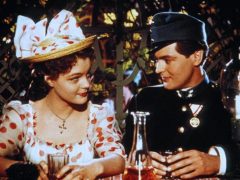
Die Wirtin von Maria Wörth fits perfectly within the conventions of the Heimatfilm genre, which continued to be the favourite genre of the major national production companies. And so, this feature film by Eduard von Borsody tells through images the story of a musical romance that favours the style of a comedy of errors over drama.
A March for the Emperor is a milestone in Austrian nostalgic cinema, capable of transforming history into a lively and visually captivating operetta that entertains and offers a welcome break from reality at the same time.
Miss Lilli is a enjoyable comedy of errors in which Franziska Gaal truly stands out; this was her last film shot in Europe before she emigrated to the United States. Her character, Lilli, is a particularly lively, clever and unconventional young woman. Restored by Filmarchiv Austria and shown on the Filmarchiv On channel.
The first thing that strikes us while watching Ball at the Savoy is its elegant, delicate and skilful staging. For his part, the director was not afraid to take risks, drawing inspiration from what was being made in the United States at the time. Restored by Filmarchiv Austria and presented on the Filmarchiv On channel.
If we consider that Vienna, City of my Dreams was made in the late 1950s, at a time when national cinema had long been seeking to move in new directions, we realise how it can be regarded as a “nostalgic” film. Willi Forst sought to create a heartfelt tribute to his city, but also to an essential era in Austrian film history. Restored by Filmarchiv Austria and presented on the Filmarchiv On channel.
Karl Hartl has paid a wonderful tribute to Wolfgang Amadeus Mozart. His Whom the Gods Love – recently restored by Filmarchiv Austria and presented to the audience on the Filmarchiv On channel – still has the remarkable ability to captivate us today, many years after its release, with all its visual and communicative power.
Watching Merry-Go-Round, based on Arthur Schnitzler’s famous play La Ronde, more than fifty years after its release, we realise its true importance. And its fierce criticism of society still seems so relevant today.
Catherine the Last – recently restored by Filmarchiv Austria and re-released to the audience on the new channel Filmarchiv On – is a feature film that is quite unique in the history of Austrian cinema. A modern fairy tale, an unusual version of Cinderella, which differed considerably from what was being produced in Austria at the time.
Das Mädchen vom Pfarrhof was often criticised by the press as a ‘’not very bold’ film that distanced itself too little from the conventions of the Heimatfilms of the time. Yet, despite everything, this feature film by Alfred Lehner works.