In KLITCLIQUE’s music video Auto, many clichés are deconstructed through an approach that is both critical and ironic. Anna Spanlang subsequently explored this same theme in several of her later works. Always in search of new cinematic languages, of course.
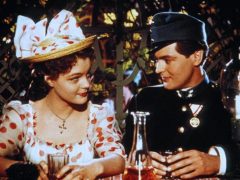
Die Wirtin von Maria Wörth fits perfectly within the conventions of the Heimatfilm genre, which continued to be the favourite genre of the major national production companies. And so, this feature film by Eduard von Borsody tells through images the story of a musical romance that favours the style of a comedy of errors over drama.
A March for the Emperor is a milestone in Austrian nostalgic cinema, capable of transforming history into a lively and visually captivating operetta that entertains and offers a welcome break from reality at the same time.
Miss Lilli is a enjoyable comedy of errors in which Franziska Gaal truly stands out; this was her last film shot in Europe before she emigrated to the United States. Her character, Lilli, is a particularly lively, clever and unconventional young woman. Restored by Filmarchiv Austria and shown on the Filmarchiv On channel.
The first thing that strikes us while watching Ball at the Savoy is its elegant, delicate and skilful staging. For his part, the director was not afraid to take risks, drawing inspiration from what was being made in the United States at the time. Restored by Filmarchiv Austria and presented on the Filmarchiv On channel.
The overwhelming presence of technology numbs our relationships and our perceptions of ourselves and others. The beauty of Perfect World, however, is that finally something begins to crack. At the Vienna Shorts 2026.
If we consider that Vienna, City of my Dreams was made in the late 1950s, at a time when national cinema had long been seeking to move in new directions, we realise how it can be regarded as a “nostalgic” film. Willi Forst sought to create a heartfelt tribute to his city, but also to an essential era in Austrian film history. Restored by Filmarchiv Austria and presented on the Filmarchiv On channel.
Karl Hartl has paid a wonderful tribute to Wolfgang Amadeus Mozart. His Whom the Gods Love – recently restored by Filmarchiv Austria and presented to the audience on the Filmarchiv On channel – still has the remarkable ability to captivate us today, many years after its release, with all its visual and communicative power.
The Jobcenter opts for the genre of comedy, in which action and music also play a key role, in order to convey not only the emotions experienced by the individual characters, but also an important message (which, hopefully, many will take to heart). At the Diagonale 2026.
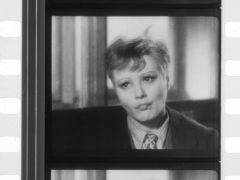
Peter is a rather innovative film for its time. And Henry Koster, for his part, wasn’t afraid to go over the top, to stage deliberately extreme situations, or to tell the audience a story that, through the genre of comedy, sought to tread uncharted territory. At the Diagonale 2026, as part of the Girls will be Boys retrospective.