The Blood Countess takes us by the hand on a journey where anything can happen. And through decidedly surreal characters, witty and hilarious dialogue, and “bloody” and wonderfully disturbing moments, it also pays sincere homage to Vienna. At the Berlinale 2026, Berlinale Special Gala section.
Radu Jude’s Dracula is a highly satirical and irreverent, yet incredibly sharp and intelligent feature film, which from the very first shots presents itself as “the film you don’t expect”. At the Viennale 2025.
In 2551.03 – The End, Norbert Pfaffenbichler has made the discourse even more topical, dealing with themes such as motherhood and unconditional love, but also revenge, and giving this important work of his universal connotations. At the Diagonale 2025.
In Solvent Johannes Grenzfurthner wasn’t afraid to dare, to show us reality through a courageous and innovative mise-en-scène, in which wide-angle shots further convey a strong sense of unease, together with splatter scenes, psychedelic lights and an increasingly frenetic editing. At the Diagonale 2025.
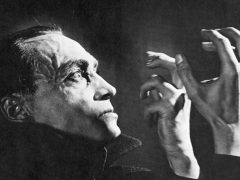
The Hands of Orlac stands out as one of the most important post-expressionist films, with a strong horror component and a character reminiscent of even the most modern international detective stories. Robert Wiene once again made history.
In Dead in 3 Days 2, Andreas Prochaska decided to abandon the slasher genre and turn to mountain horror, thanks in part to the evocative snowy locations that immediately convey a strong sense of disorientation and agoraphobia.
Transformation, discovery, experimentation. In Mara Mattuschka’s ID, there is all this, and the director herself has had fun staging this bizarre ‘adventure’ by experimenting with digital for the first time, but still giving her short film a touch of yesteryear.
What immediately strikes us about Im Haus der alten Augustin are the extraordinary atmospheres typical of that 1980s cinema of which we still often feel a strong nostalgia. At the Diagonale 2024.
In Fear, a realistic and highly innovative directorial approach in which there is very little and essential dialogue ties in well with splatter scenes that are so reminiscent of 1980s Italian horror cinema, but which nonetheless find their own fulfillment here, revealing a strong, well-marked personality. At the Viennale 2023, as part of the Filmarchiv Austria’s retrospective Keine Angst.
In Outer Space, Peter Tscherkassky has once again shown us how cinema itself can take on different connotations each time, how a film, through skilful editing, can become a completely new work, how easy it is to mould pre-existing images to one’s will. And so this work of his immediately reveals itself to be a highly controversial film, which almost desecrates the seventh art itself.