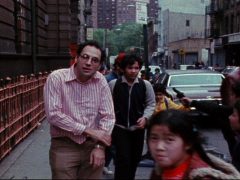
MONEY
Money captures well a reality that only those who have experienced it first-hand can truly understand, but which, in fact, concerns practically all of us and which, despite the passing of the years, remains so dangerously relevant.


Money captures well a reality that only those who have experienced it first-hand can truly understand, but which, in fact, concerns practically all of us and which, despite the passing of the years, remains so dangerously relevant.

In KLITCLIQUE’s music video Auto, many clichés are deconstructed through an approach that is both critical and ironic. Anna Spanlang subsequently explored this same theme in several of her later works. Always in search of new cinematic languages, of course.

In That to You, Nana Swiczinsky simply told us about herself. And she did so through a little, precious film in which the constant search for new cinematic languages immediately takes centre stage.

In Helen A/B + Das Meer, through images captured by the camera directly from a computer monitor, we witness a profound and never banal reflection on how images are manipulated each time, on duality in cinema, and on how certain clichés have now become commonplace.

The Secret of the Grey Cells can undoubtedly be considered an autobiographical film, but also – and above all – a work that offers an ironic and humorous insight into the fascinating world of art during one of its most delicate phases.
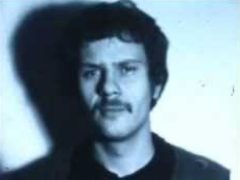
In Die Fliege, a short, amusing little story magically comes to life on the movie screen, immediately capturing our attention, keeping us in suspense and, of course, entertaining us.

In Doorfourteen, an empty space can still seem incredibly alive and vibrant, and the stories that gradually come to life are actually telling us not about the flat depicted in the short film, but about the people themselves who are trying to imagine them.
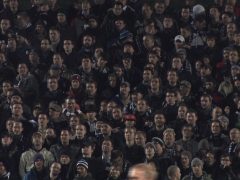
Heading is a brief and fascinating journey into a world we are all familiar with, but certain aspects of which we usually never analyse or observe.

Hubert Sielecki’s Liebe TV is a careful and ironic analysis of the world of broadcasting and its relationship with the audience in the postmodern era.

In Dropping Furniture, the ‘past’ comes to the movie screen in a totally ‘unconventional’ way. The objects, dropped by the two directors from a height of seven metres, shatter into a thousand pieces upon hitting the ground. The end result is almost a kind of choreography with a visually mesmerising effect, at the end of which the two initially empty rooms appear wonderfully colourful.