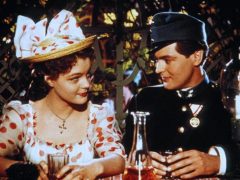
A MARCH FOR THE EMPEROR
A March for the Emperor is a milestone in Austrian nostalgic cinema, capable of transforming history into a lively and visually captivating operetta that entertains and offers a welcome break from reality at the same time.


A March for the Emperor is a milestone in Austrian nostalgic cinema, capable of transforming history into a lively and visually captivating operetta that entertains and offers a welcome break from reality at the same time.

Das Mädchen vom Pfarrhof was often criticised by the press as a ‘’not very bold’ film that distanced itself too little from the conventions of the Heimatfilms of the time. Yet, despite everything, this feature film by Alfred Lehner works.

An unexpected encounter, a false identity, a series of misunderstandings that trigger the most unthinkable situations. In the case of The Congress dances, Franz Antel has attempted to tread a safe path by staging a past success, while revealing little courage in reinventing himself.

Particularly accurate in its settings and sufficiently attentive to the love torments of the two young protagonists, The Life and Loves of Mozart is distinguished by a direction that, however, would have needed more closeness to the characters themselves, in order to better render their internal conflicts derived from the difficult choices they have to make. In competition at the 1956 Cannes Film Festival.

Georg Wilhelm Pabst’s The Last Ten Days is the chronicle of the end of an era that would nevertheless have many consequences, even after many years. Sporadic ironic moments serve to soften the dramatic nature of the events. Particular care and elegance in the mise-en-scene make the film extraordinarily full of pathos.

Sissi, directed by Ernst Marischka, is a romantic comedy filmed in a pleasant and elegant way, clearly intended for an international distribution, in order to give the world a lively and joyful image of Austria and of what was, in its time, the Austro-Hungarian Empire.