Life in the small town flows peacefully. The camera, with its simple, essential shots, acts as a silent witness to it all. And through a direct, straightforward staging devoid of any virtuosity, Im alten Feldkirch finds its ideal form. Restored by Filmarchiv Austria and presented on the Filmarchiv On channel.
In Alltag in Steyr, a heartfelt and entertaining tribute to the history of cinema provides a welcome diversion within a documentary characterised by a purely classical directorial approach, which offers us a comprehensive insight into what life was like at the time in the little, picturesque town of Steyr. Restored by Filmarchiv Austria and presented on the Filmarchiv On channel.
Miss Lilli is a enjoyable comedy of errors in which Franziska Gaal truly stands out; this was her last film shot in Europe before she emigrated to the United States. Her character, Lilli, is a particularly lively, clever and unconventional young woman. Restored by Filmarchiv Austria and shown on the Filmarchiv On channel.
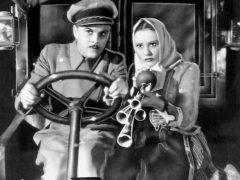
Catherine the Last – recently restored by Filmarchiv Austria and re-released to the audience on the new channel Filmarchiv On – is a feature film that is quite unique in the history of Austrian cinema. A modern fairy tale, an unusual version of Cinderella, which differed considerably from what was being produced in Austria at the time.
With Lumpaci the Vagabond, Géza von Bolváry has successfully captured the essence of a timeless story. A story that is still as relevant today as ever and that, between one gag and another, also knows how to move us.
Silhouetten is a particularly interesting and refined work within Reisch’s filmography and Austrian cinema of the 1930s. For the occasion, the director collaborated with another important artist: German director and animator Lotte Reiniger. Enthralling music, elegant dance costumes and the Opera House full of enthusiastic viewers have a magnetic effect on the audience.
Undoubtedly, the story staged by E. W. Emo in The Fairy Doll is nothing particularly original. It could even be stated that the feature film has acquired particular historical importance today precisely because it is one of the films in which Romy Schneider’s parents took part when they were young. Yet, despite everything, we must recognise a certain grace and elegance in the staging of the tender love story between the two young protagonists.
Love triumphs in Court Theatre. But will it be so for everyone? And, above all, is love or career more important? How much can people’s opinions influence a person’s life? Willi Forst has staged it all with a strong lyricism, but also with the right cynicism, especially when it comes to dealing with certain dynamics within the show business and the upper middle class.