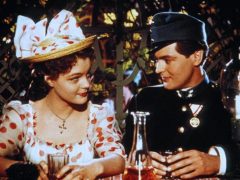
A MARCH FOR THE EMPEROR
A March for the Emperor is a milestone in Austrian nostalgic cinema, capable of transforming history into a lively and visually captivating operetta that entertains and offers a welcome break from reality at the same time.


A March for the Emperor is a milestone in Austrian nostalgic cinema, capable of transforming history into a lively and visually captivating operetta that entertains and offers a welcome break from reality at the same time.

Miss Lilli is a enjoyable comedy of errors in which Franziska Gaal truly stands out; this was her last film shot in Europe before she emigrated to the United States. Her character, Lilli, is a particularly lively, clever and unconventional young woman. Restored by Filmarchiv Austria and shown on the Filmarchiv On channel.

Karl Hartl has paid a wonderful tribute to Wolfgang Amadeus Mozart. His Whom the Gods Love – recently restored by Filmarchiv Austria and presented to the audience on the Filmarchiv On channel – still has the remarkable ability to captivate us today, many years after its release, with all its visual and communicative power.
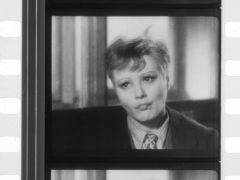
Peter is a rather innovative film for its time. And Henry Koster, for his part, wasn’t afraid to go over the top, to stage deliberately extreme situations, or to tell the audience a story that, through the genre of comedy, sought to tread uncharted territory. At the Diagonale 2026, as part of the Girls will be Boys retrospective.

With Lumpaci the Vagabond, Géza von Bolváry has successfully captured the essence of a timeless story. A story that is still as relevant today as ever and that, between one gag and another, also knows how to move us.

Marika is a cheerful, lively and – also in a metaphorical sense – wonderfully colourful feature film. The first colour film in Austrian film history.

In We Invite You to a Dance, the typical Wiener Film elements are all there, and they make up an undoubtedly pleasant and well-written story, although extremely simple and with practically no subplots.

Ernst Marischka’s Two in a Car perfectly embodies the mood of the melodramatic but nonetheless entertaining post-World War II Wiener Films, also proving to be a witty portrait of the society of the time.

Die kluge Marianne is an elegant and funny comedy of errors, a story that might seem anachronistic today, but, at the same time, a true declaration of love to women. A film that, even many years after it was made, is perfectly capable of filling viewers’ hearts with joy and optimism.

Eroica follows the canons of the Wiener Films, in which elegant costumes and the world of the upper middle class become the main actors. Yet, this important film by Kolm-Veltée shows a marked personality, focuses mainly on the genius of Beethoven and cleverly avoids any possible clichés.