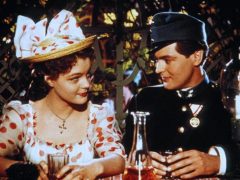
A MARCH FOR THE EMPEROR
A March for the Emperor is a milestone in Austrian nostalgic cinema, capable of transforming history into a lively and visually captivating operetta that entertains and offers a welcome break from reality at the same time.


A March for the Emperor is a milestone in Austrian nostalgic cinema, capable of transforming history into a lively and visually captivating operetta that entertains and offers a welcome break from reality at the same time.

If we consider that Vienna, City of my Dreams was made in the late 1950s, at a time when national cinema had long been seeking to move in new directions, we realise how it can be regarded as a “nostalgic” film. Willi Forst sought to create a heartfelt tribute to his city, but also to an essential era in Austrian film history. Restored by Filmarchiv Austria and presented on the Filmarchiv On channel.

Karl Hartl has paid a wonderful tribute to Wolfgang Amadeus Mozart. His Whom the Gods Love – recently restored by Filmarchiv Austria and presented to the audience on the Filmarchiv On channel – still has the remarkable ability to captivate us today, many years after its release, with all its visual and communicative power.
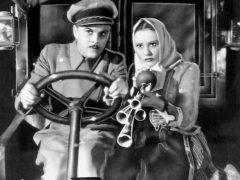
Catherine the Last – recently restored by Filmarchiv Austria and re-released to the audience on the new channel Filmarchiv On – is a feature film that is quite unique in the history of Austrian cinema. A modern fairy tale, an unusual version of Cinderella, which differed considerably from what was being produced in Austria at the time.

With Lumpaci the Vagabond, Géza von Bolváry has successfully captured the essence of a timeless story. A story that is still as relevant today as ever and that, between one gag and another, also knows how to move us.

Silhouetten is a particularly interesting and refined work within Reisch’s filmography and Austrian cinema of the 1930s. For the occasion, the director collaborated with another important artist: German director and animator Lotte Reiniger. Enthralling music, elegant dance costumes and the Opera House full of enthusiastic viewers have a magnetic effect on the audience.

Undoubtedly, the story staged by E. W. Emo in The Fairy Doll is nothing particularly original. It could even be stated that the feature film has acquired particular historical importance today precisely because it is one of the films in which Romy Schneider’s parents took part when they were young. Yet, despite everything, we must recognise a certain grace and elegance in the staging of the tender love story between the two young protagonists.

Episode stands out first and foremost for its particularly elegant mise-en-scene. A stylistic grace that proves to be perfectly in line with a simple but at the same time courageous story, which immediately shows the far-sightedness of Walter Reisch himself. Volpi Cup for Paula Wessely at the 1935 Venice Film Festival.

Presented in competition at the Venice Film Festival 1934, Maskerade won the Best Screenplay Award. While following the canons of the Wiener Films, with a story set in the world of the upper middle class, its splendour, sumptuous costumes and music, both Willi Forst and screenwriter Walter Reisch wanted to give the whole thing a different touch, pointing the finger at a hypocritical and decadent society reminiscent of Arthur Schnitzler’s works.

It is not surprising that a feature film like 1. April 2000 (a fine fantapolitical satire directed by Wolfgang Liebeneiner) was made precisely in 1952, seven years after the end of the world war and only three years before the Austrian State Treaty by which, among other things, the nation’s neutrality was officially proclaimed.