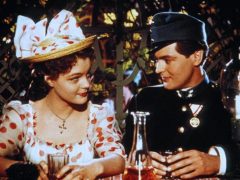
A MARCH FOR THE EMPEROR
A March for the Emperor is a milestone in Austrian nostalgic cinema, capable of transforming history into a lively and visually captivating operetta that entertains and offers a welcome break from reality at the same time.


A March for the Emperor is a milestone in Austrian nostalgic cinema, capable of transforming history into a lively and visually captivating operetta that entertains and offers a welcome break from reality at the same time.
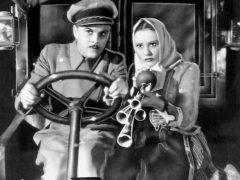
Catherine the Last – recently restored by Filmarchiv Austria and re-released to the audience on the new channel Filmarchiv On – is a feature film that is quite unique in the history of Austrian cinema. A modern fairy tale, an unusual version of Cinderella, which differed considerably from what was being produced in Austria at the time.

Multi-talented actress, able to adapt perfectly to any role assigned to her, for many years a member of the Vienna Burgtheater, Adrienne Gessner was for more than forty years the wife of the famous writer and theatre director Ernst Lothar.

Despite being a heavily fictionalised feature film with many flaws, Crown Prince Rudolph’s last Love by Rudolf Jugert works. And it does so with a decidedly simple screenplay, which focuses first and foremost on the essentials without digressions and almost entirely devoid of subplots. Everything foreshadows an impending tragedy. The shadows get the better of the lights. Mary Vetsera’s naive face speaks for itself.

Produced by the legendary Viennese production company Sascha-Film, a pioneer of silent films and the first sound films made in Austria, the amusing musical comedy Die Abenteuer des Grafen Bobby also confirms the successful harmony between a series of actors with theatrical and musical backgrounds.

Tales from the Vienna Woods is set in the early 1930s, but tells a story that could happen today, as well as tomorrow. Two stage actors introduce the audience to the stories of the protagonists at the Belvedere Gardens. Maximilian Schell’s camera immediately shows us a man from the back as the sun sets. An image that will recur frequently throughout the feature film along with numerous totals and pan shots necessary to maintain a certain detachment.

Compared to The Trapp Family, one almost gets the impression that The Trapp Family in America works almost on autopilot. What was successful in the first film is almost faithfully re-presented here. The music moves, but not as much as it should, and similarly, the numerous flashbacks that refer back to the 1956 feature film come across as excessively contrived.

The Angel with the Trumpet, the successful feature film by Karl Hartl from 1948 and freely adapted from the novel The Vienna Melody, written by Ernst Lothar in 1946, is a family saga and faithful portrait of around sixty years of Austrian history, which successfully mixes the two different points of view – that of Hartl himself, as well as the point of view from the original novel.